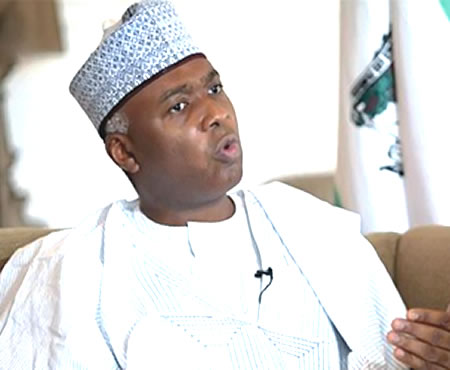
President of the Senate, Dr Abubakar Bukola Saraki has said the repositioning of the Nigerian economy to effectively meet the challenges of the 21st century is a major priority of the current Senate.
Saraki stated this while declaring open a one day public hearing on a bill to repeal and reenact the Bankruptcy and Insolvency Act of 1979, organised by the senate Committee on Banking, Insurance and Other Financial Institutions, in Abuja on Monday.
It was on that basis, he said, the Senate has prioritised business environment reform that would create more jobs and opportunities for the youths, promote and sustain domestic entrepreneurs, as well as to attract new investors into the country.
He said: "We believe that it is important for us to continue the process of strengthening Nigeria's business related legislations by examining our bankruptcy laws. This is because global best practices have taught us that the bedrock of modern competitive economies is based on free entry and free exit.
"This would also mean that for free exit to be orderly in the event of losses, Nigeria needs stronger bankruptcy and insolvency laws to guide the process that would ensure that such firms that incur losses can easily break even and exit the markets using several market tools and intervention mechanisms."�
Insolvency system and practice, the Senate President said, plays an important role in attracting both domestic and foreign investments, as well as promoting investments and entrepreneurial development.
The event, according to him, was not aimed at witch-hunting, but rather at generating authentic information to enhance and guide the committee.
Ibrahim disclosed that the bill was referred to the committee on November 3, 2015, made up of 13 parts rendered in 269 clauses, an improvement on the existing Act with 143 clauses, most of which have become outdated and could not sustain contemporary developments and changes.
Among stakeholders that attended the public hearing were office of the Attorney-General of the Federation, Asset Management Corporation (AMCON), Ministry of Foreign Affairs, Ministry of Finance, Nigerian Bar Association (NBA), National Deposit Insurance Corporation (NDIC), among others.
Politics